


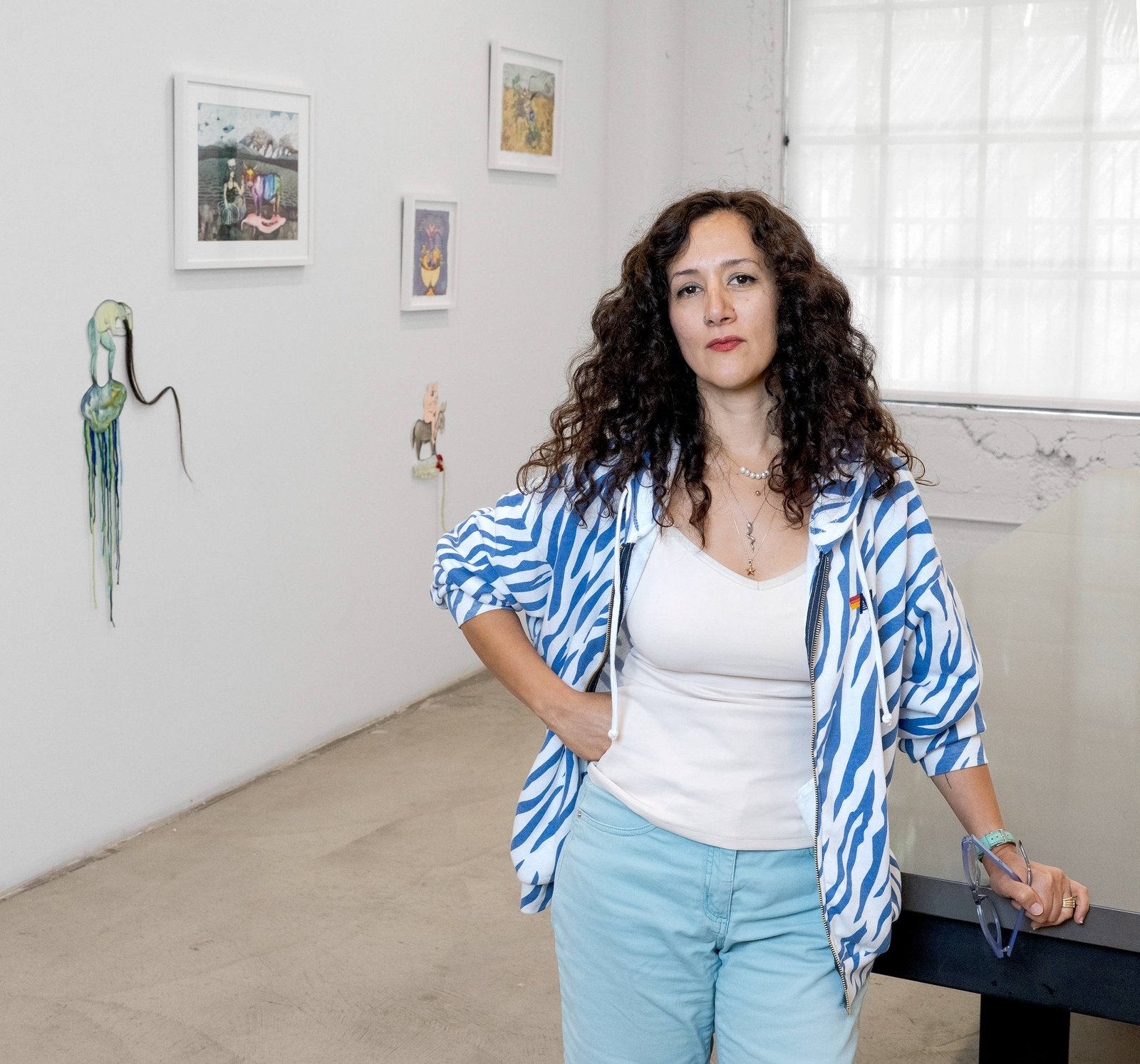
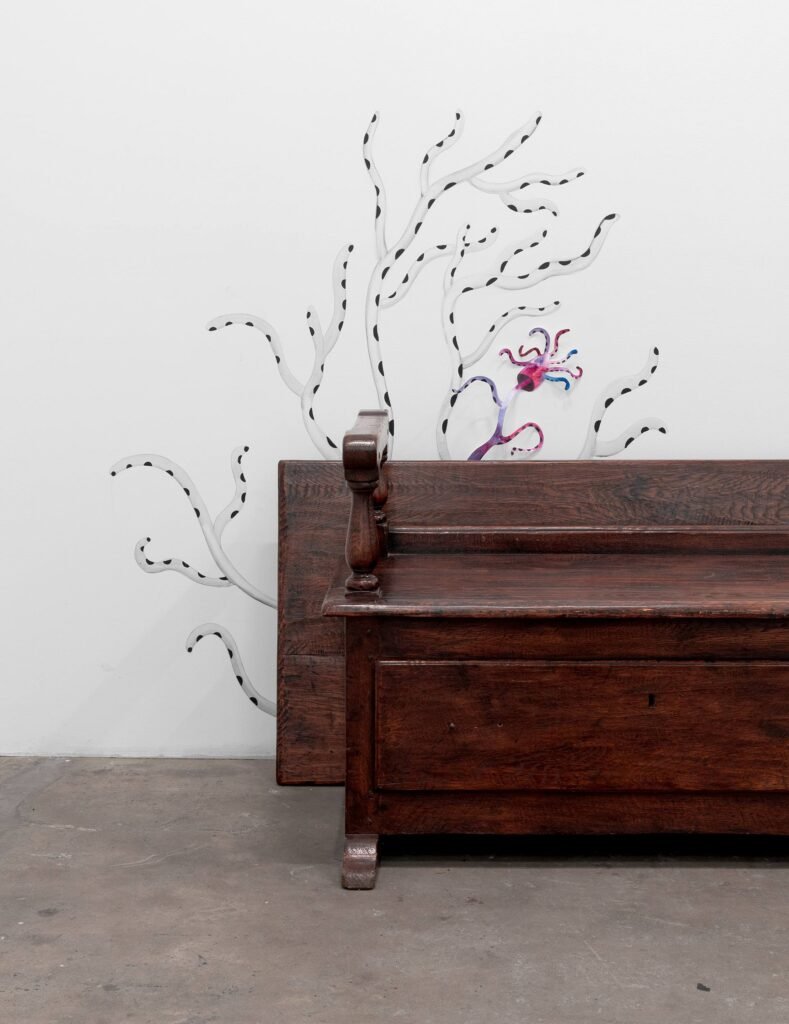
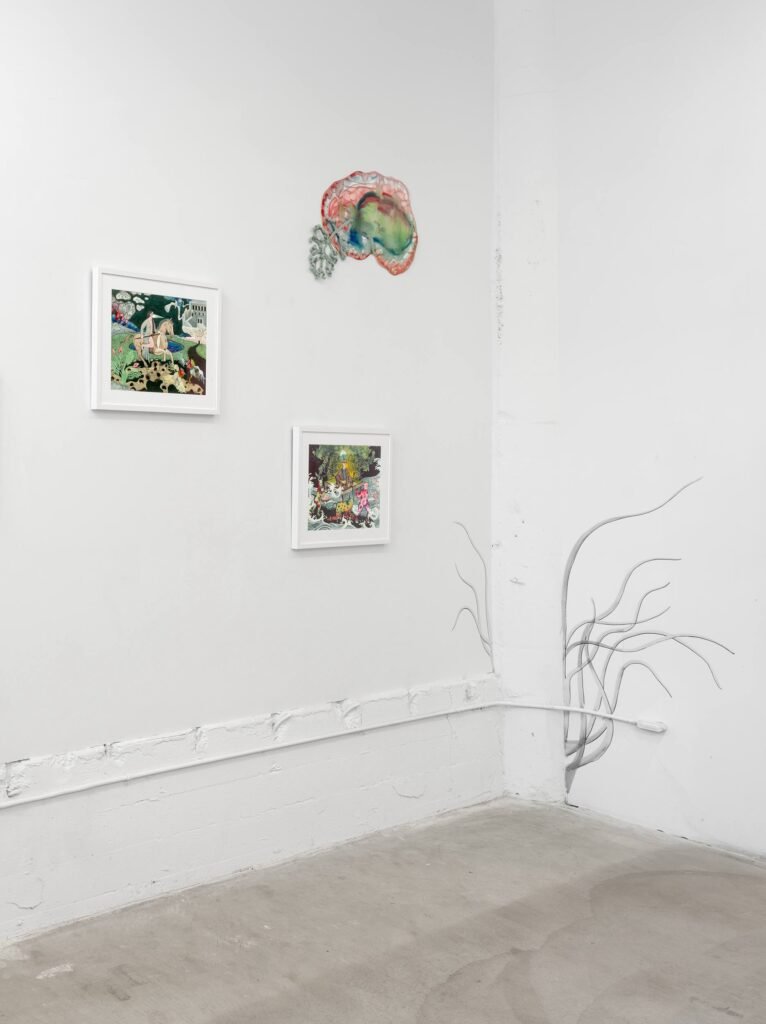
On the occasion of her exhibition Whispers: Women, Animals and Chimeras, Elika Hedayat presents a new body of work that draws from Persian mythology, feminist thought, and speculative imagination. Moving between memory, history, and fiction, the exhibition revisits narratives from the Shahnameh through a contemporary lens, shifting attention toward figures that have often occupied secondary roles within traditional accounts.
From studying in Iran to settling in Paris, how did this path unfold?
I studied at the University of Art in Tehran. In 2004, I went to Paris to continue my studies at the School of Fine Arts. Initially, staying there wasn’t my intention, but I ended up remaining. This movement between Iran and France, being positioned between two cultures, has created a sense of hybridity that has become an essential part of my work.
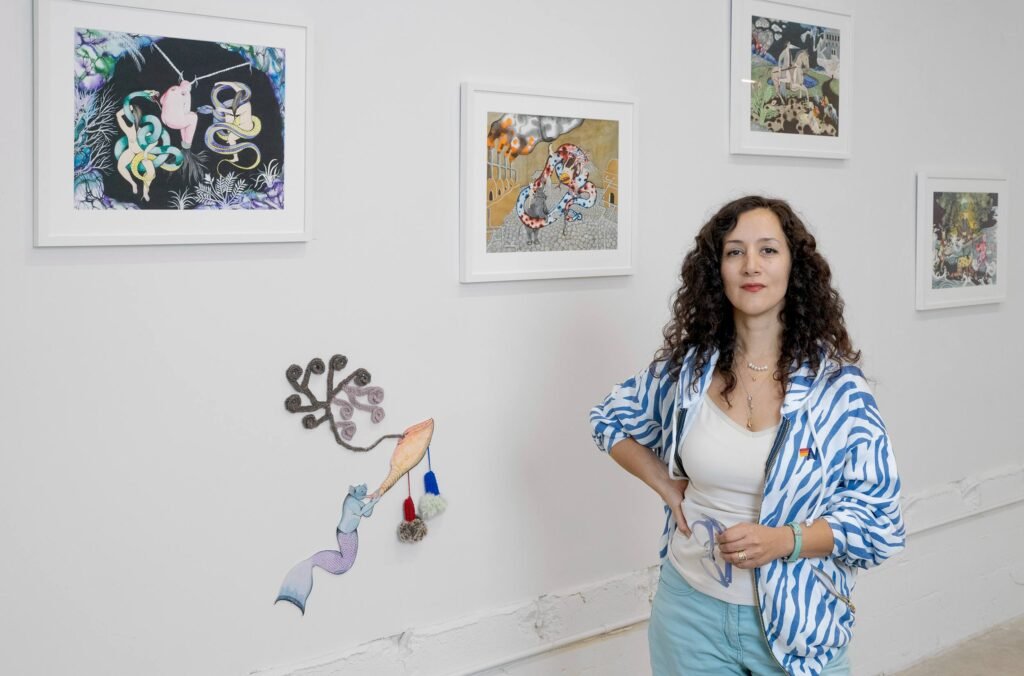
Where does the concept of metamorphosis and dystopian spaces in your work come from?
I grew up in a theatrical family; performance and storytelling were always present. Later, I was influenced by diverse sources, from Iranian coffeehouse painting and folklore to Dutch Renaissance painting. I depict strange situations with a kind of dark humor. There are societies in my work that initially resemble utopias but gradually turn into nowhere-lands, not necessarily apocalyptic, but more concerned with power games and the breakdown of social structures.
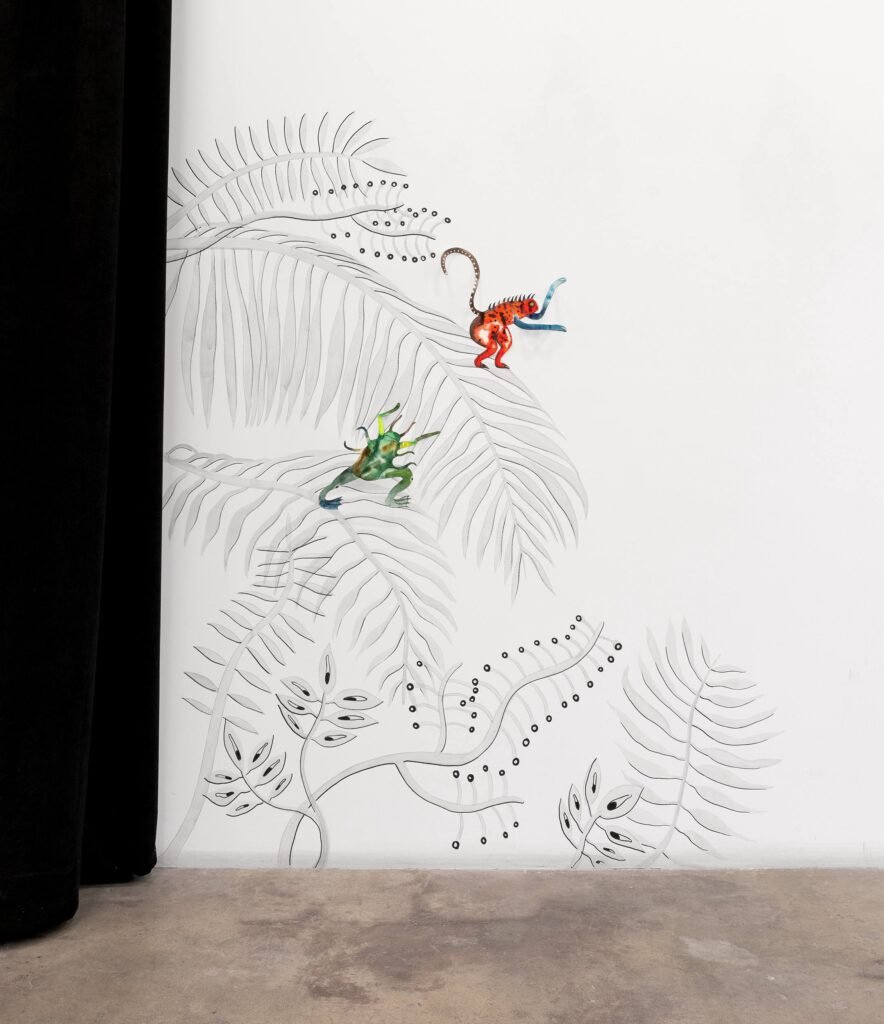

What narrative does the “Haroum” series hold, and where does its name come from?
The name “Haroum” comes from the Shahnameh and Eskandar Nameh by Nezami. In this series, we encounter an ecological utopia governed by women, where warrior women are also present. The ruler of this city is “Nushabe.” Its concept is inspired by philosopher Donna Haraway’s idea of a “compost society.” Instead of seeking endless growth and control, we learn to live together, care for damaged worlds, and create new possibilities from what already exists. My narrative isn’t faithful to the Shahnameh; I’m seeking a different reading of those stories.
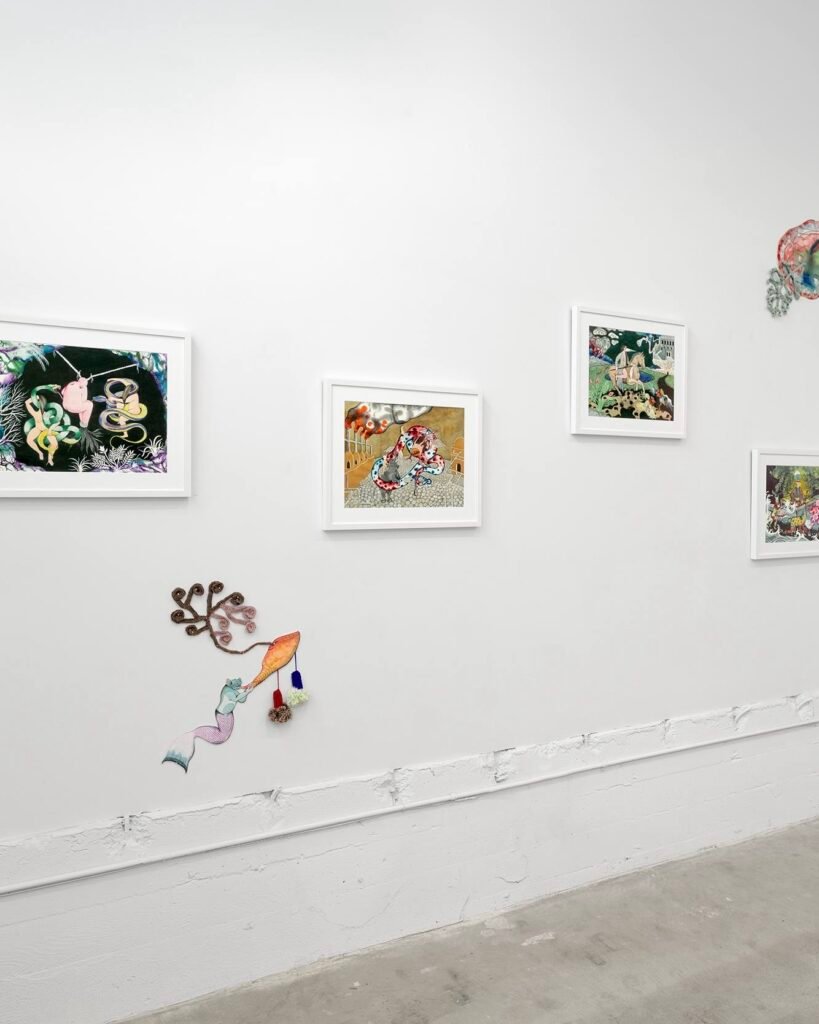
How have the concerns in your work evolved over time?
A new chapter opened with deeply intimate feminist and ecological preoccupations, alongside my motherhood, which happened to coincide with COVID. Each of my works is part of a larger narrative, as if all the pieces are a continuation of one big scenario.