


Asal is building a world of her own, and inviting us into the light
There is only a slight chance of meeting one of your favourite artists in the middle of Bond Street on a wet, windy, occasionally sunny London morning. Yet there she was: Asal, curls piled high, walking towards us with her crew and the easy body language of someone who somehow feels familiar before you have even said hello.
Her speaking voice has the same warmth as the one that lives in her songs. She hugs you like the friend your parents trust completely. The one your mum always asks after, and the same friend with whom you might quietly take the car out after everyone has gone to sleep. Asal’s previous album, Missing Something, would be the soundtrack to that midnight drive: the city viewed from a distance, its red, white and yellow lights reduced to glowing dots. Her new album, Kiss the Sun, belongs to the journey home when you see the dawn. It has daylight in it. Released in late May, it has already become a constant among many of our Iranian and non-Iranian friends.
At 21, the Iranian-born, Vancouver-based artist has reached a scale few emerging musicians experience so early. With more than 2 million monthly streams and a rapidly expanding audience, Asal has become the most-streamed emerging Iranian artist of her generation. Her influence is already visible in musicians coming up around her, including some of the artists featured elsewhere in this issue. Numbers, though, explain only the reach. They do not explain the intimacy. The sense that even millions of listeners are hearing something that was meant, somehow, just for them.
That intimacy became the centre of our day with her in London.
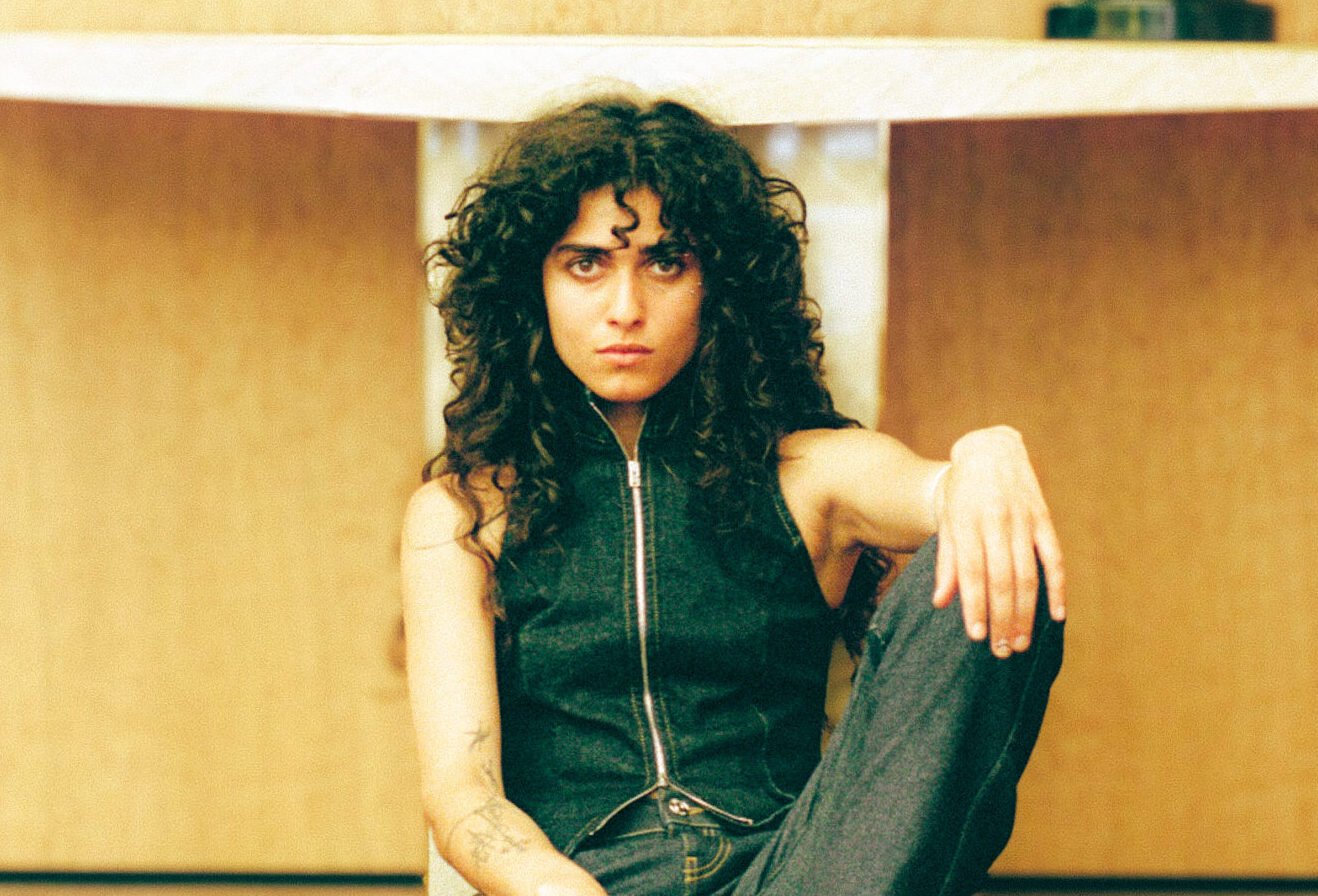
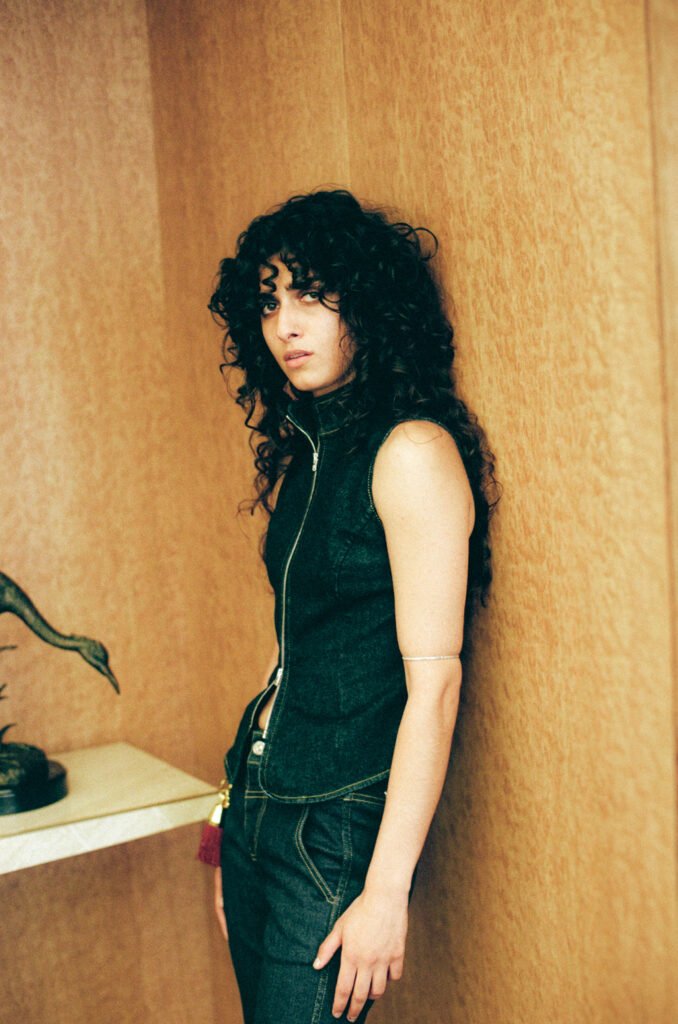
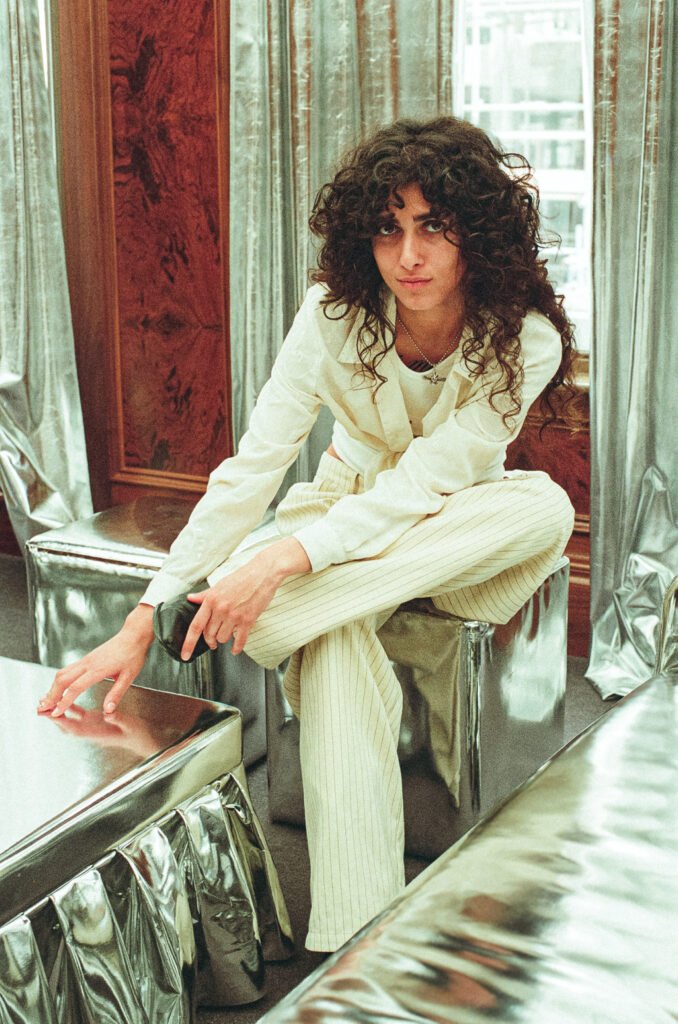
For this cover shoot, The Persian Magazine partnered with Iranian creative director MVINITY, also known as Moheb, building the story across several locations in the city. From the beginning, meeting Asal and her crew could not have been friendlier. Before long, we had disappeared into the first location Moheb had arranged: a space of dark cream, brown and wood, with a kind of West Coast ease that seemed to meet Asal halfway. Clothes moved between rails and bodies; lighting was adjusted; ideas became images. Asal ran around the room trying things on, and the entire place seemed to bounce with her presence.
Before the first look was fully settled, the conversation had already turned to Kiss the Sun. Moheb and I shared an immediate favorite: the album’s closing track, “i heard (merci)”. For an Iranian listener, its tone carries an almost involuntary nostalgia. The guitar recalls the psychedelic character heard in Kourosh Yaghmaei’s music, as a memory resurfacing in a different time and body.
“I listen to at least a few songs from Back From the Brink every day,” Asal told us. “It has become a ritual. I’ve always been influenced by him.”
That influence was not left to chance. Asal and her team worked through layer after layer of effects, searching for a guitar sound with the tonality and personality of Yaghmaei’s psychedelic rock. It is the kind of reference that rewards an Iranian ear without shutting anyone else out. You do not have to recognize its lineage to feel its pull; knowing where it comes from simply opens another door.
This balance between what can be recognized and what can only be felt runs throughout Kiss the Sun. It also marks a decisive change from Missing Something. Asal described the earlier album as the product of fast-moving sessions with different producers in Los Angeles, where production often led the songs. This time, she wanted the work to begin closer to herself.
“Most of the tracks on the previous album came from sessions with different producers in LA, happening very quickly,” she said. “There was much more of a production-first approach. With Kiss the Sun, we gathered as many home recordings as we could and built from them. Because of that, I let more of the Asal persona in. I focused much more on the lyrics. I wanted to mean every word and for everything to feel personal. I also brought in more Farsi and more of my Iranian identity than I had before.”
Then there are the final seconds of “i heard (merci)”: a small, fragile recording that sounds as though the album has found a hidden room inside itself. We asked where it came from.
“That’s me as a child,” Asal said. “It’s one of the first original lyrics I ever wrote. I found a recording of myself playing guitar and singing. Because it was the last track on the album, I thought it might be the right way to finish it.”
The choice changes the meaning of an ending. Instead of closing with a polished final statement, Asal lets the person she was speak to the artist she has become. The child’s voice is not used as decoration or as a neat origin myth. It arrives like evidence: she has been trying to find the language for this feeling for a long time.
Asal handled the main production and recording of Kiss the Sun herself, working largely from home through a year of profound highs and lows. During that period, she lost her father. There was understandable encouragement to repeat the approach of Missing Something after its success, but repetition could not hold what she needed to express. Home recording gave private feeling somewhere to enter. Grief, memory, family and identity could be woven into the record without first being translated into a more familiar commercial shape.
I asked whether working alone and at home had created any happy accidents. Her answer involved her mother, a Farsi chorus and perhaps the most efficient guest-vocal session in recent memory.
While making “let you go”, Asal had written a Farsi phrase for the chorus. She was recording in her bedroom, but the melody followed her around the house even after the microphone was switched off. Eventually, her mum picked it up and began singing it too.
“I was recording the final vocal takes and I could hear my mum’s voice bleeding into the mic,” Asal said, laughing. “She was in the background singing the same chorus melody. I thought, you know what? It would actually be cool to record her as a main vocal for the last chorus. So I put the mic in front of her, and she nailed it. First take.”
No comping, no dramatic studio negotiation, no notes from the producer: just her mum, one take, done. It is funny because of how ordinary the scene is, but that ordinariness is exactly what makes it matter. Kiss the Sun does not merely discuss home; home can actually be heard inside it, occasionally wandering into the microphone uninvited.
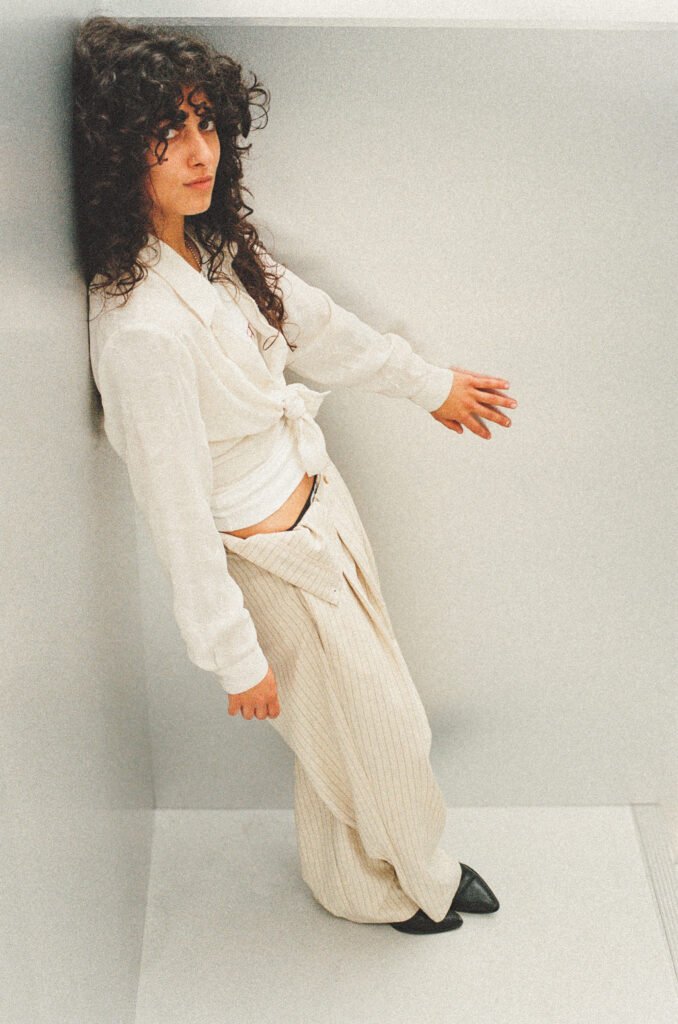
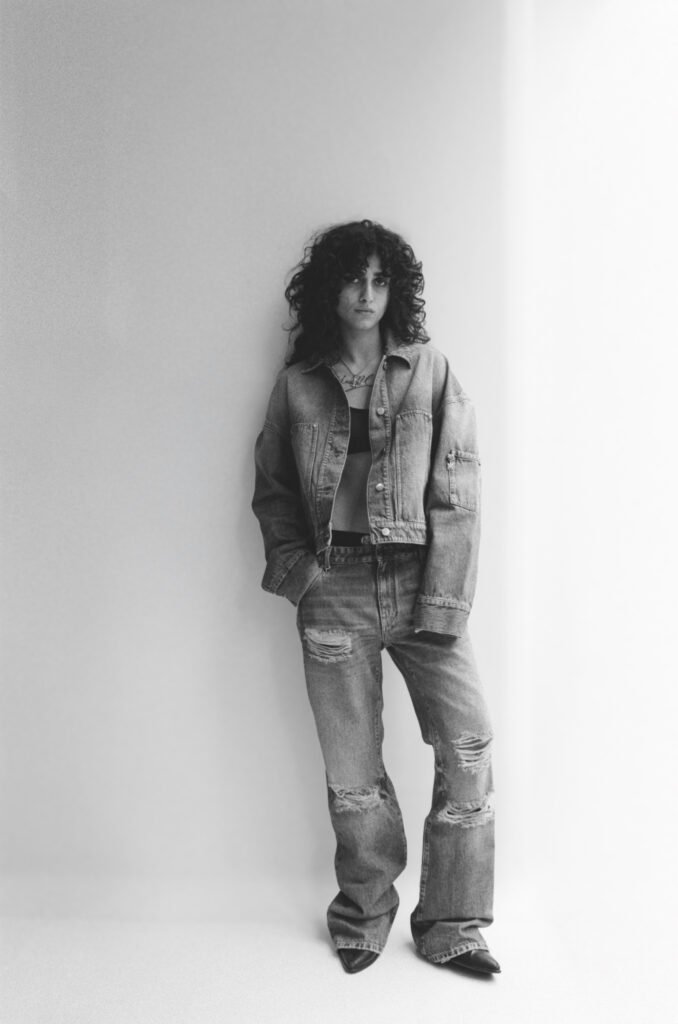
Asal began trying on the looks Moheb had prepared, and everything came together with the same ease. There was no sense of forcing her into an externally designed character. Each piece appeared to reveal a different angle of someone already present. As we moved between styling and photographs, our conversation drifted further back, to Shiraz, childhood and the first images that made performance feel possible.
“I was born in Shiraz and left Iran when I was 12,” she said. “One thing I clearly remember is dressing up with my cousins like the people we saw in music videos on PMC. We would imitate the singers and all the movements in the videos. It was one of the things that made music feel so special and interesting to me. We had so much fun doing it.”
There is something perfect about an artist now watched by millions having begun by recreating satellite television performances with her cousins. Before the streams, the tours and the London cover shoot, there was the democratic magic of dressing up and pretending the room was a stage. Performance first arrived not as ambition, but as play.
The audience surrounding Asal has changed considerably since those early days. Her music has become more popular within the Iranian listener community, and her relationship with the Iranian community has become increasingly visible. She remembers Iranian supporters from the beginning, but the scale and warmth of that recognition have grown with every release.
“I’ve been contacted by some of my favorite artists, like Shahin Najafi and Tohi,” she told us. “It’s very special because these are the same people I listened to when I was growing up. Now many of them support me, and I’m really grateful for that.”
As we spoke about that growing Iranian fanbase, about friends who found themselves in Asal’s songs whether they were in English, Farsi or both, our surprise arrived outside.
And it was not a subtle surprise.
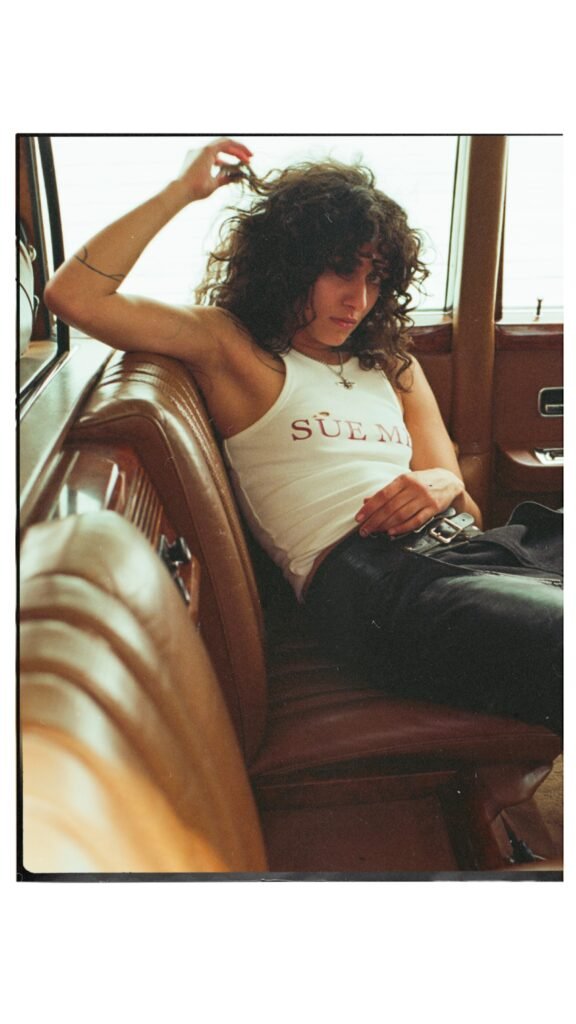
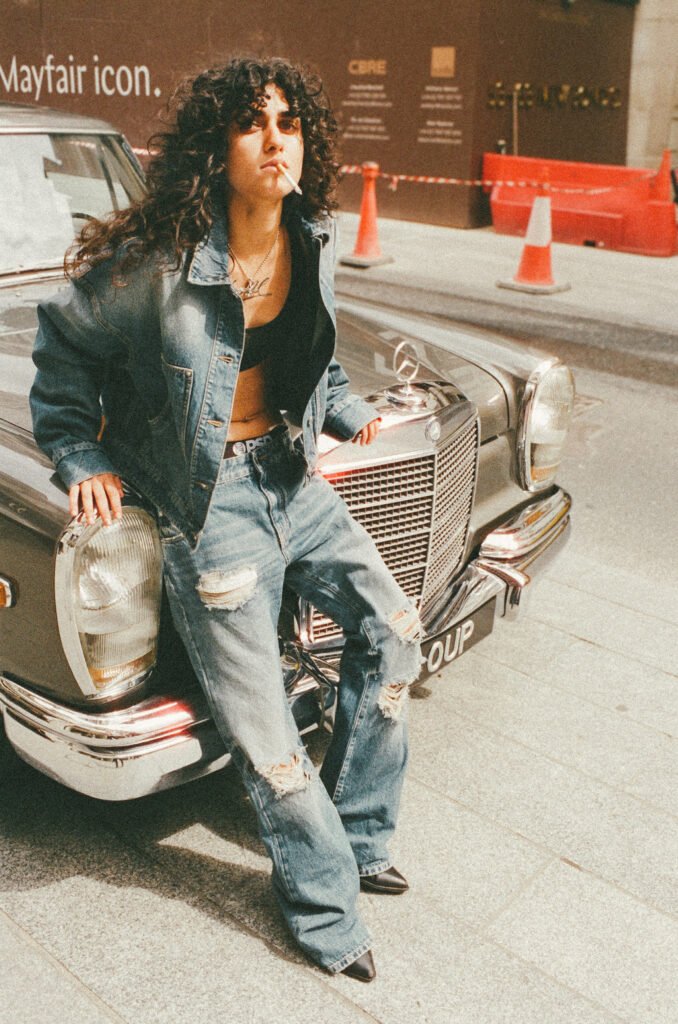
Waiting in front of the location was a Mercedes-Benz 600 PULLMAN, commissioned by Iran’s last king before the revolution. In a room already filled with Iranian press, an Iranian creative director and stylist, and an Iranian artist reconnecting more openly with her heritage, the car felt almost impossibly specific. An object carrying one version of Iranian history, now placed beside a young Iranian woman making another.
“Today is such a highlight for me,” Asal said. “It’s the first time I’ve been surrounded by Iranian people like this; Iranian press, an Iranian stylist and photographer, and now a car commissioned by Shah. This is so special.”
We stepped outside and began shooting. Asal’s excitement grew as the owner explained more of the car’s history and its relationship to Iran. Every few minutes, London’s gray cloud cover broke apart and the sun landed on the scene like a spotlight summoned precisely on cue. Office workers paused on their way in and out of nearby buildings, understandably unsure why Bond Street had transformed into a film set. Iranian passers-by recognized the car, recognized Asal or simply recognized the energy, and stopped for a selfie.
It was not a typical afternoon for anyone involved, least of all the corporate crowd trying to return from lunch.
Standing in that temporary patch of sunlight, we began talking about the title Kiss the Sun.
“Someone once complimented me on how sun-kissed and tanned I was, and I started thinking about that phrase,” Asal explained. “People say you’re sun-kissed, as though the sun has given you this beauty on your skin. I grew up in southern Iran for almost half my life, so I have this connection to it. But then I thought: the sun is always kissing people. It gives energy and makes the effort to affect everything, but nobody kisses the sun back. Nobody can kiss it in the same way it kisses them. I felt that energy needed an action in return. I thought, kiss the sun, that’s what you should do.”
The phrase captures the album’s emotional movement. It is not a passive request to receive light, love or inspiration. It asks for reciprocity. Kiss back. Answer warmth with warmth. Meet what gives you life with an effort of your own. After a year shaped by grief, self-reliance and return, the title feels less like an aesthetic and more like a decision.
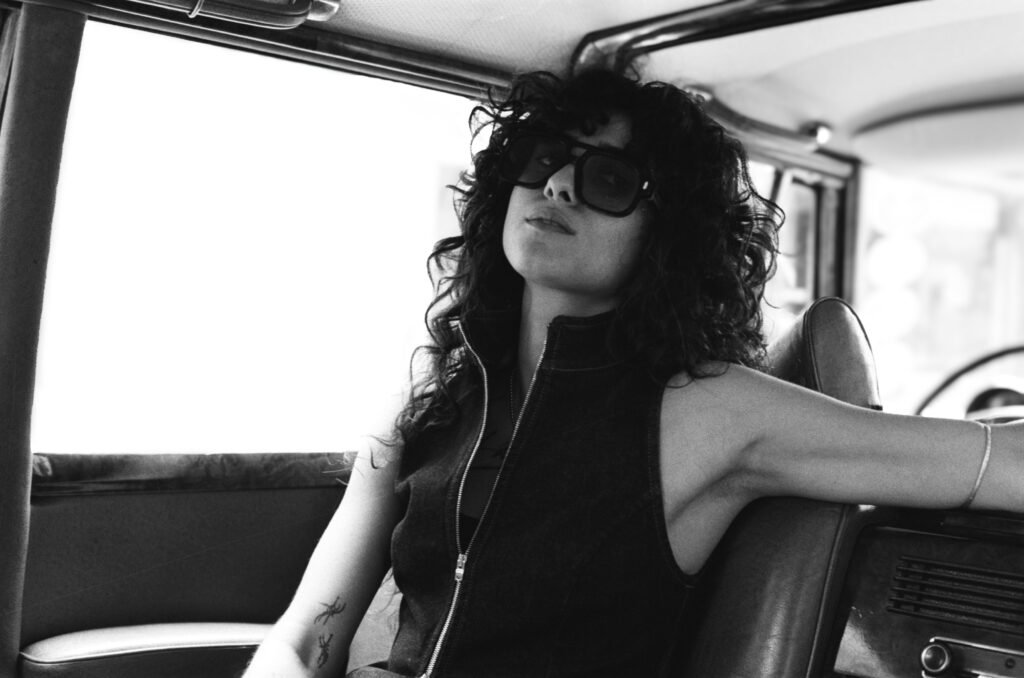
We climbed into the car and moved through London with old Iranian songs filling the space. Moheb introduced us to neglected psychedelic rock from before the revolution, including an artist named Parviz whom, to our embarrassment, none of us knew. The discovery became part of the day’s pleasure: music passing between generations and geographies, from old recordings to a historic car to phones, speakers and a conversation between artists.
Moheb and Asal, both from southern Iran, compared the music they grew up with and still return to, including Mehrshad. When I asked what Asal listens to regularly, and where influence enters her work, she described Iranian music as a reference point that does not need to produce an obviously “Iranian” result.
“I always listen to these Iranian tunes,” she said. “Even though most of my songs are in English, I find influence in underrated Iranian music and carry it with me when I write. It always becomes a good reference. That doesn’t necessarily mean the song will end up sounding Joonobi or very Iranian, but it always helps.”
This may be the clearest way to understand Asal’s relationship with influence. She does not treat Iranian identity as an accessory to be placed on top of a finished song, nor as an obligation to make work that can be easily categorized. The archive is alive to her. A guitar texture, a remembered television performance, a southern melody, a Farsi phrase or a child’s voice may enter the process and emerge transformed. The result belongs to several places at once, without needing to apologize to any of them.
Within two days of our shoot, Asal would exchange our locations and long conversations for rehearsal rooms, green rooms and the stage. Her European tour began in London, followed by a North American run opening in Chicago and traveling through cities including Los Angeles, Toronto and Vancouver. Kiss the Sun may have been made in the private atmosphere of home, but its second life is necessarily public.
Recording and performance demand different forms of honesty. In the studio, Asal can collect fragments, follow accidents and place the voice of her younger self at the end of a record. On stage, those decisions must become immediate. Her introduction to live performance arrived in a way that still feels special to her: in 2024, she opened for one of her favorite artists, Artemis. She later played her first sold-out headline show in London.
“So many things have changed since then,” she said, “but the people I work with today were sharing those early stages with me. Blake, the person who is now my manager, was there for those first live performances. It’s very special to grow with my team and to keep working together as everything develops.”
Spend time with Asal and she begins to feel like family. The same closeness is visible within her crew: a group growing alongside one another rather than assembling around a finished success story. There is quiet confidence in the way she carries the work, but also a willingness to interrupt her own formula. She is not interested in becoming trapped by the version of herself that first found an audience. Instead, she returns to old memories to pull something new from them.
That instinct extends to the artists she brings into her world. Across the tours, her support acts and live collaborators include Kilu, a British singer-songwriter of Iranian heritage opening the London show, and French Perfume, the duo formed by Iranian artist Mona Khoshoi and her fiancé, Jeremy. French Perfume will support dates on the North American tour and join Asal on stage as part of the band. These choices create a wider ecosystem around the music, one in which connection is not merely spoken about, but practiced.
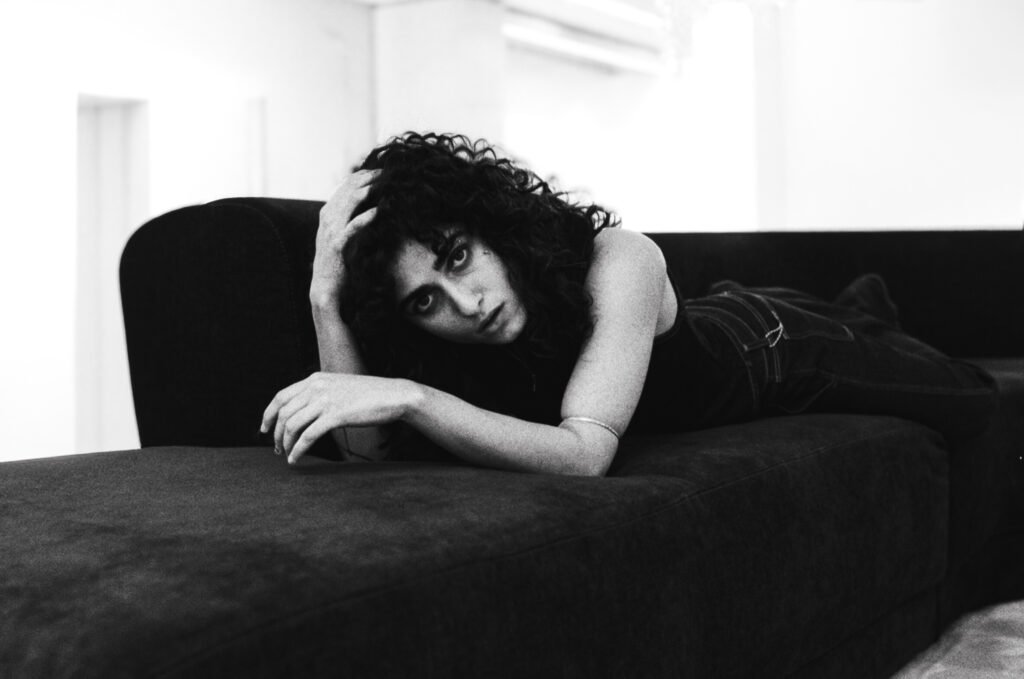
For Asal, the immediate future is deceptively simple: record more, perform more and sustain the rhythm of creating over the coming years. Yet consistency does not mean predictability. If Missing Something introduced the scale of her appeal, Kiss the Sun reveals the artist’s determination to choose depth over replication. Success offered her a formula; she chose a bedroom microphone, old voice notes, difficult memories and the possibility of hearing her mum through the wall.
If you are reading this as a fan of Asal, let her surprise you. It tends to work.
She might have been surprised with the Shah’s Mercedes before the shoot, but Asal spent the rest of our time finding ways to counter-surprise us. At her London show, she invited me to play guitar beside her during “let you go”, turning a song we had discussed in a quiet room days earlier into one of the most personal moments of the night. She surprised the crowd with an unreleased collaboration on stage. She surprised us with the force of a performance that could hold the vulnerability of the record without simply reproducing it.
Perhaps that is the real exchange at the center of Asal’s world. A song leaves a bedroom and returns through a crowd. Music from Iran crosses decades and oceans, then reappears in the grain of a guitar. A mother’s voice bleeds into a recording and becomes part of the final take. A historic car arrives as a gift and carries a new generation through London. The sun kisses your skin; you find a way to kiss it back.