


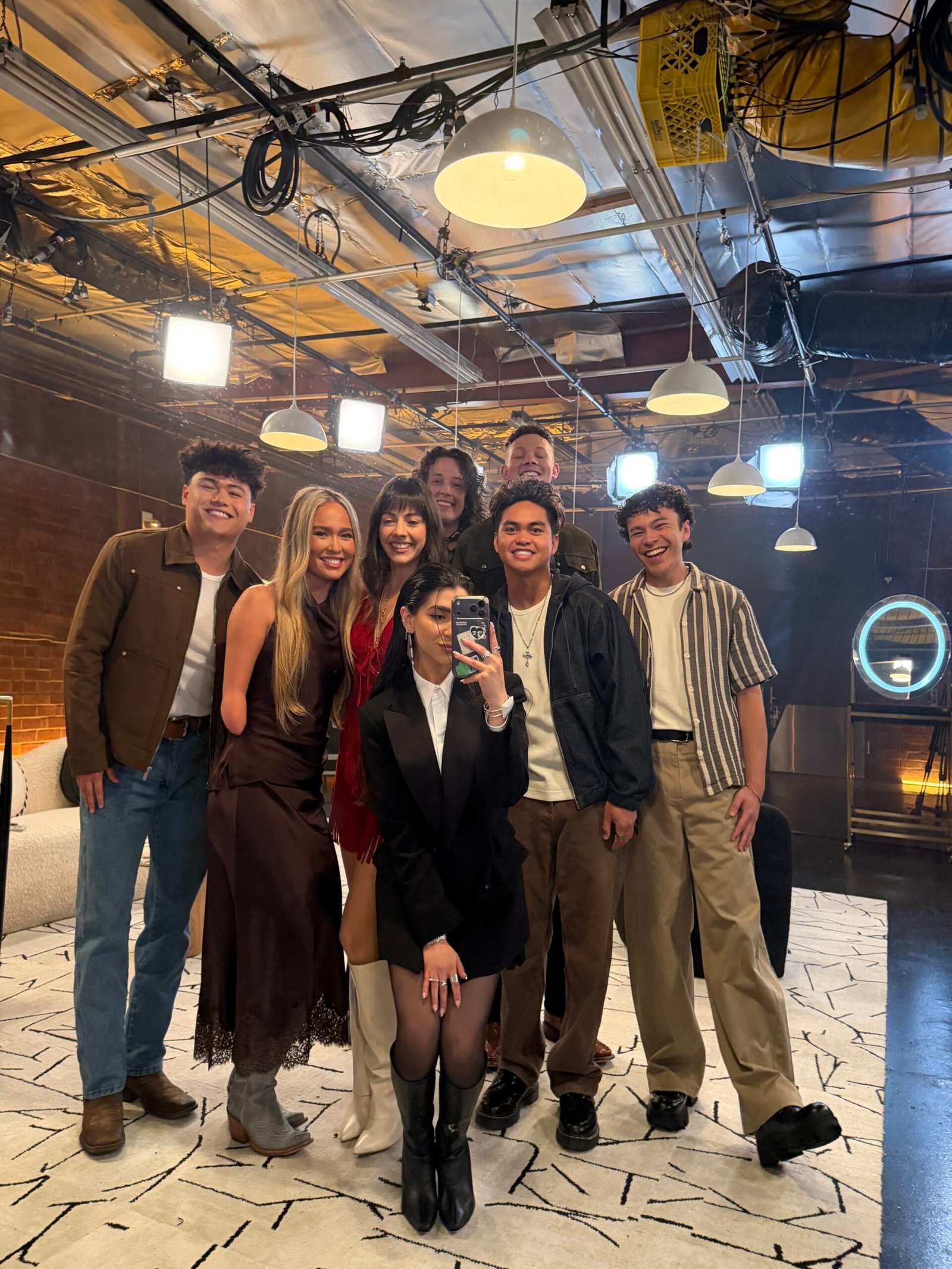
What does being the first Persian woman on The Voice mean to you, especially having grown up in Iran?
“It’s a strange feeling, honestly. I don’t think I’ve fully processed it yet.
I grew up in Tehran, where being a woman comes with a very different understanding of what freedom looks like. There are things that people elsewhere might never even think twice about, like singing in front of an audience, that can feel completely out of reach for a girl growing up in Iran.
And I think that’s what makes this experience so surreal to me. I went from being that little girl to standing on a stage in front of millions of people, singing exactly how I wanted to sing, looking how I wanted to look, and being completely myself.
But I also want to be careful with the idea of being the first, because there are so many unbelievably talented Iranian women who came before me, and so many who never had the opportunity to be heard. Being the first to do something doesn’t necessarily mean being the first who deserved to.
I think the most emotional part of this entire experience has actually been the response from Iranians, especially those living in Iran. The amount of love I’ve received is something I genuinely don’t know how to put into words. It reminds me that even though I’ve spent so much of my life away from home, that connection has never really left me.
And if my being on that stage made even one girl back home feel a little closer to something she thought was impossible, then that means more to me than anything I could have accomplished on the show.”
Why did you choose RAYE’s “Oscar Winning Tears” for your blind audition?
“First of all, I absolutely adore RAYE. I think she’s one of the most extraordinary artists of our generation.
I’ve always been drawn to music that makes me feel something before I even understand what it’s trying to say. And “Oscar Winning Tears” does exactly that for me.
There’s something so theatrical about it. The storytelling, the orchestration, the way it moves between vulnerability and anger, and how it gradually builds into something so powerful. I love music that has contrast. Something can be delicate and almost painfully beautiful one second, and completely explosive the next.
And vocally, it gave me the freedom to explore all those different emotions within one performance.
I also didn’t want to choose a song just because I knew I could sing it well. I wanted something I could really get lost in. Something that felt like a performance rather than just a demonstration of my voice.
I think RAYE has this incredible ability to make technically complicated music feel so human and effortless. That’s something I admire enormously.”
Who’s an artist, dead or alive, that you would love to open for?
“Lana Del Rey. Without a second thought.
She’s been one of my biggest inspirations for as long as I can remember, not necessarily because I want to make music that sounds exactly like hers, but because of the world she’s managed to create around her art.
I love artists who have such a distinct identity that you can recognize their work without even knowing it’s theirs. There’s something so beautiful about that.
Lana’s music has this combination of melancholy, romance, darkness, nostalgia, and femininity that I find completely fascinating. She doesn’t seem afraid of being vulnerable, dramatic, or misunderstood, and I really admire that.
I think opening for her would be one of those moments where I’d have to remind myself to actually breathe. :)))”
What message would you share with young Iranian women who dream of pursuing music?
“I think the first thing I’d want to tell them is that they don’t need anybody’s permission to dream.
And I know how easy that sounds coming from someone who has the privilege of living somewhere she can actually pursue those dreams. I’m very aware that for a lot of girls in Iran, the obstacles are not just emotional or financial. They’re real restrictions that can affect their freedom and safety.
So I would never want to tell someone to simply be fearless, because sometimes fear is there for a very good reason.
But I do want them to know that their circumstances don’t determine their worth, their talent, or what they’re capable of becoming.
I also think we put so much pressure on ourselves to have everything figured out. To know exactly who we are, what we want to sound like, what kind of artist we want to be. And the truth is, I’m still figuring those things out myself.
I’ve changed my mind a thousand times. I’ve doubted myself, started over, gotten overwhelmed, and questioned whether I was doing any of it right. And I probably will again. :)))
But I think that’s part of being an artist. You’re constantly discovering new parts of yourself.
More than anything, I hope Iranian women get to experience a future where expressing themselves isn’t considered an act of courage. Where singing is just singing. Where being a woman doesn’t automatically make your dreams more complicated.
And until that day comes, I hope they never forget how much they have to offer the world.”