Written by Sarina Moradi
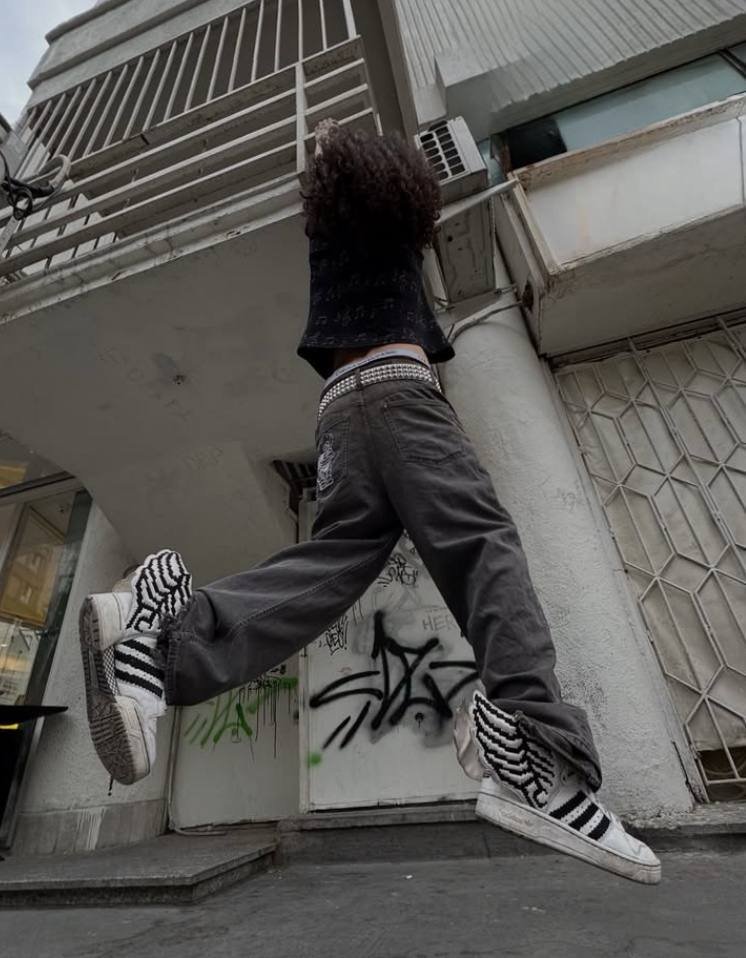
In the late 2010s, Jeremy Scott released his now-iconic winged sneakers with Adidas, a design that quickly became one of the most recognizable pieces associated with his work. Almost two decades have passed since their introduction, yet the image of those wings continues to circulate in fashion and pop-culture. As is commonly observed, trend cycles tend to operate on a twenty-year loop.


What was once considered new, unusual or eventually even outdated can eventually return, finding a new audience and acquiring a different meaning in the process. Fashion rarely moves in a straight line; instead, it constantly revisits its own past, bringing familiar objects back into the present.
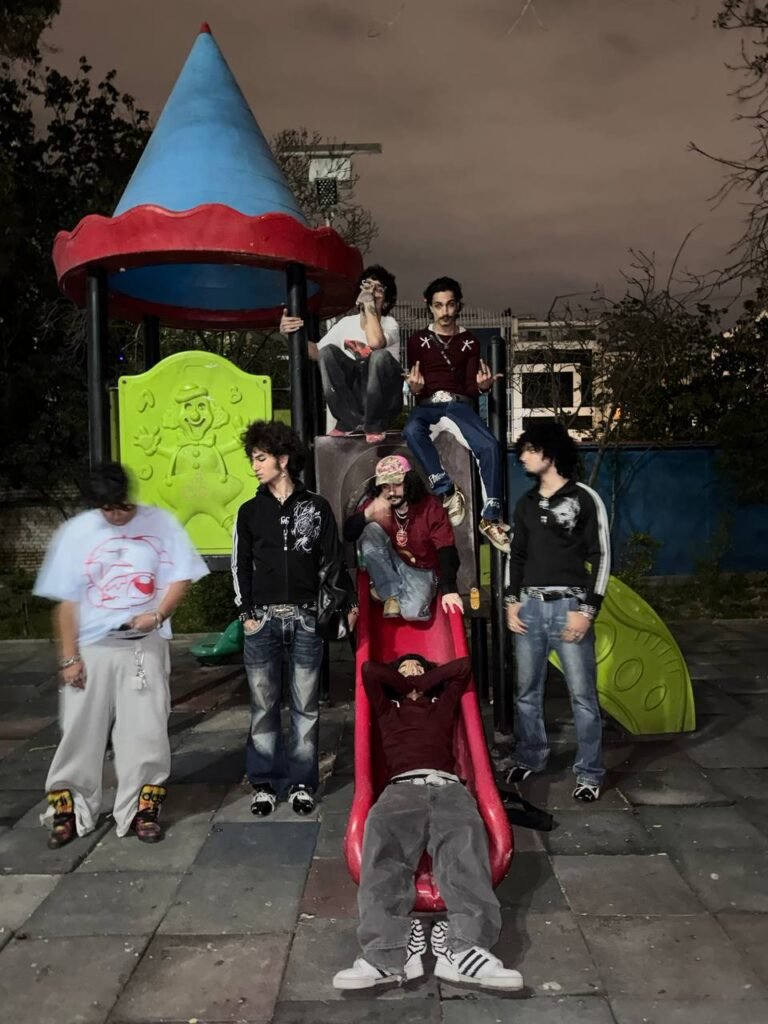
This time, however, Tehran’s underground scene seems to have anticipated the return of the trend, adopting it before its mainstream revival.
The winged sneakers found their way into a scene that often operates according to its own sense of timing, taste and distinction. Or perhaps they did, because there is something inherently temporary about being underground. The moment a trend becomes mainstream, its underground status is effectively killed. What once distinguished a particular group from the wider public suddenly becomes accessible to everyone, and the very quality that made it desirable begins to disappear.
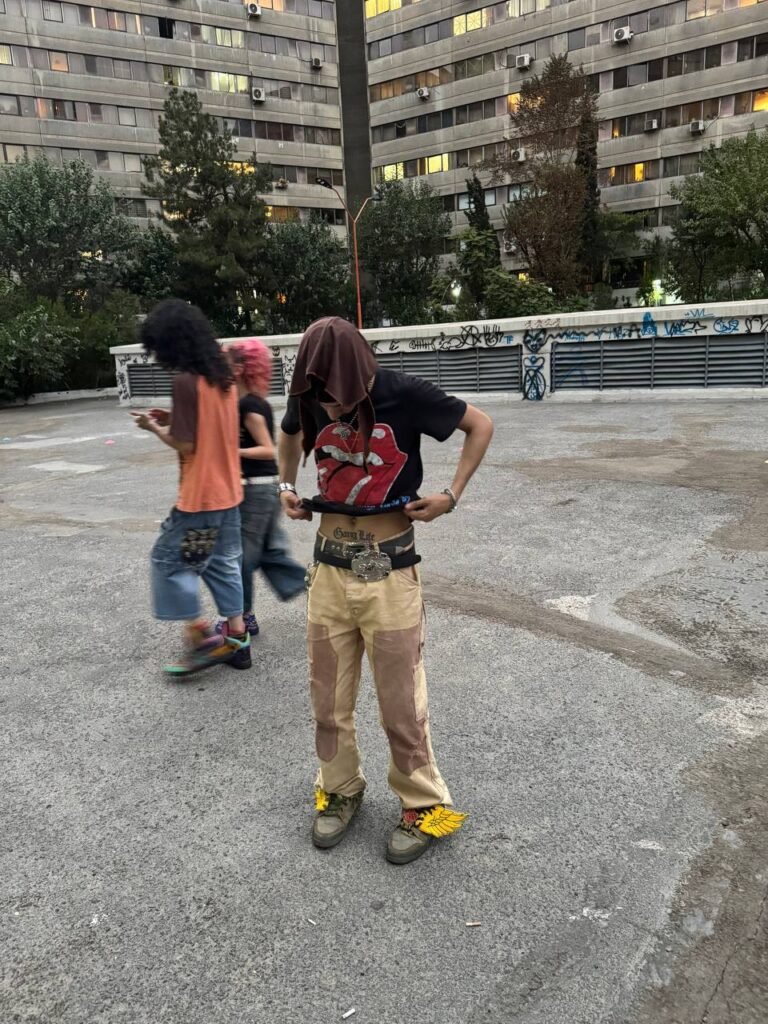
Scott drew inspiration from two sources when designing these sneakers. The first was basketball players whose bodies seem to momentarily defy gravity when they jump to dunk. At the height of a jump, they appear to fly, suspended in the air for a brief moment before returning to the ground. Scott translated this impression of movement and elevation into a physical design, giving the sneakers wings that made the idea of flight visible.
The second source was Hermes, the Greek god who protects travellers and merchants, serves as a messenger, and guides souls to the underworld. His wings are among his most recognisable attributes, representing movement, communication, and speed. As a figure who travels between different worlds, Hermes is associated with constant movement and the ability to cross boundaries. These associations became part of the visual language behind Scott’s design, connecting the sneakers to ideas that extend beyond their practical function as footwear.
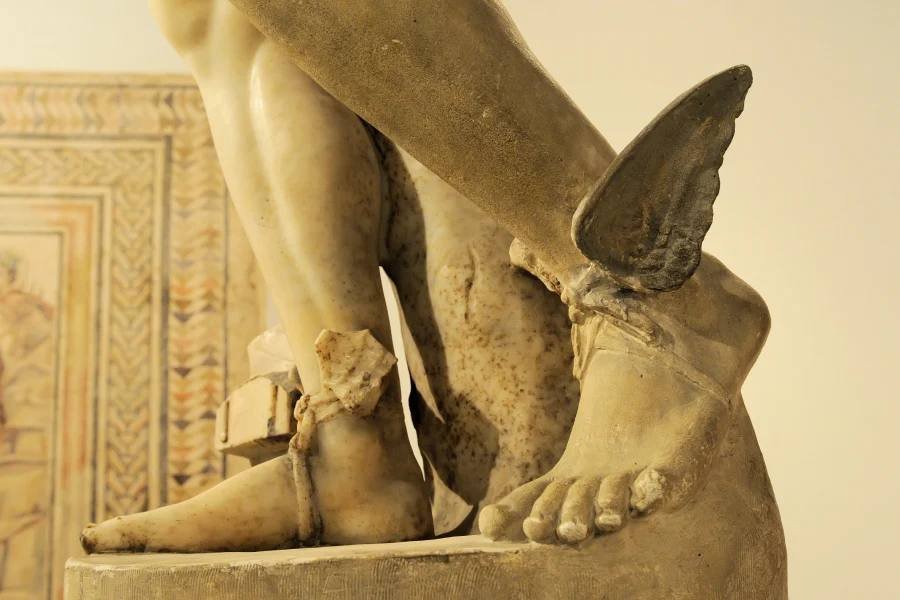
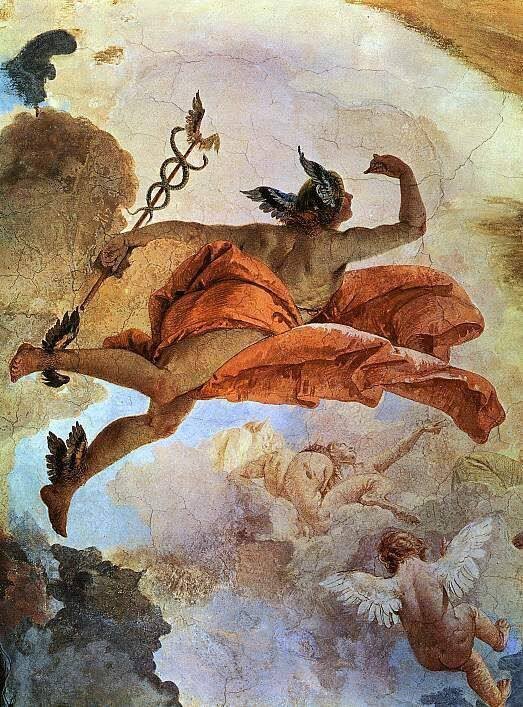
It doesn’t matter if young people in Tehran have never heard of Hermes or paid any particular attention to Greek mythology. They may not even know what inspired Scott’s design in the first place. The historical and mythological references behind the sneakers are not necessarily part of the way they understand or engage with them. But this hardly matters, because the collective unconscious processes aesthetics differently. An object can communicate something without its audience knowing the story behind it. Its visual qualities can carry meanings that are felt rather than consciously understood, allowing an image to resonate independently of its original context.
It is an unconscious that celebrates the delivery of messages, flight from the underground to greater heights, and, of course, speed. The wings become more than a decorative element attached to a pair of sneakers. They suggest movement, the possibility of escape, and the desire to move beyond existing limits. They also connect the act of travelling with the act of communicating, recalling Hermes’s role as a messenger who moves between different places and worlds. In this sense, the design brings together several associations that can be understood through its appearance alone.
Speed matters immensely in this context. As KalaQ, one of the members of this community, puts it, whatever is popular is mainstream. Once something becomes mainstream, it is no longer underground. And whatever is no longer underground loses its value in our eyes. The appeal of a trend is therefore closely connected to how long it can remain outside the attention of the wider public.