


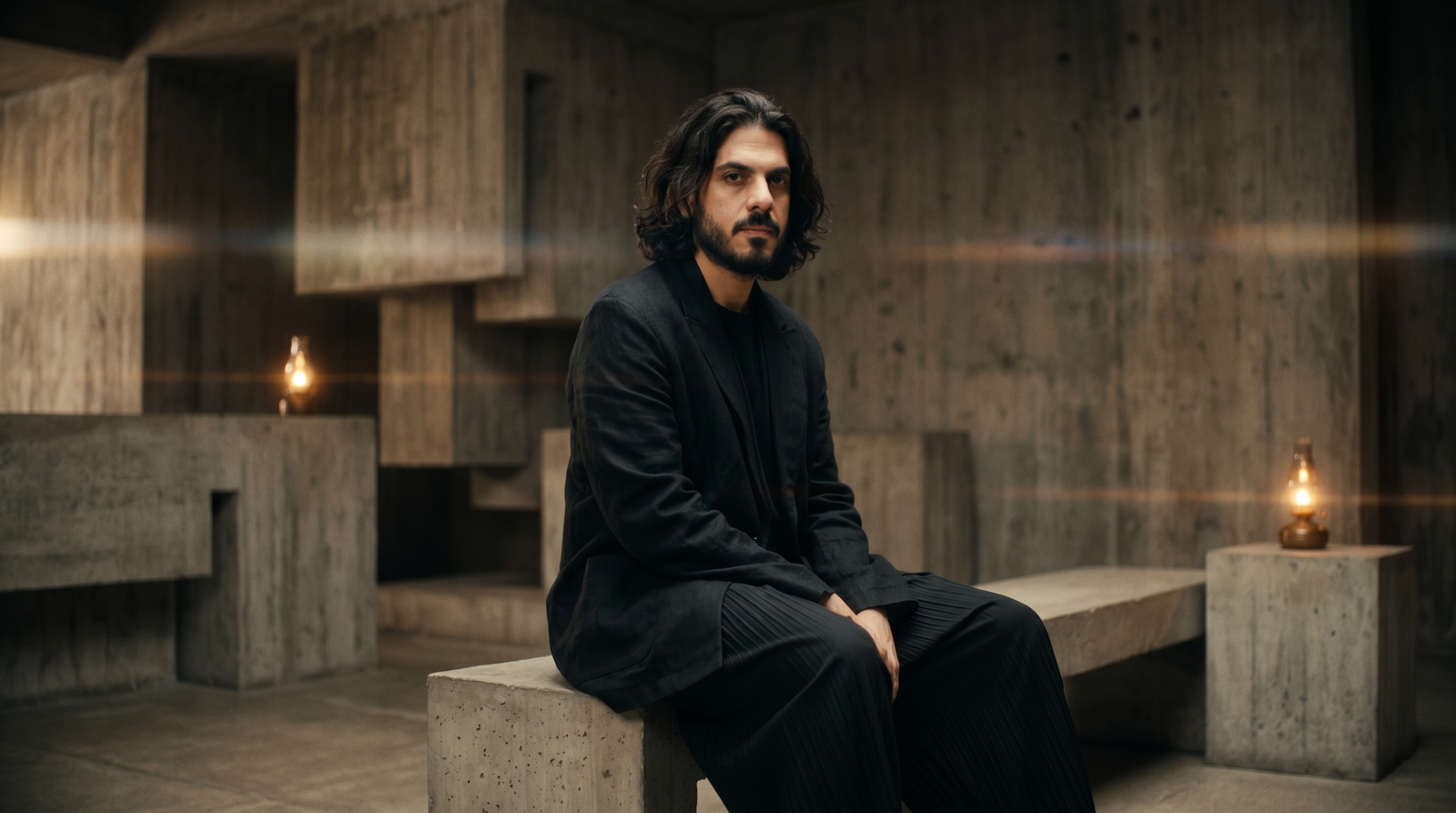
Written by: Sarah Jafari
What was supposed to be a straightforward 30-minute interview turned into an hour-long conversation, where I abandoned my long list of prepared questions within minutes. Speaking to Ash Koosha was nothing as I expected. Instead of simply discussing filmmaking or artificial intelligence, we found ourselves theorizing about what it means to create and consume art while witnessing unimaginable horrors unfolding thousands of miles away.
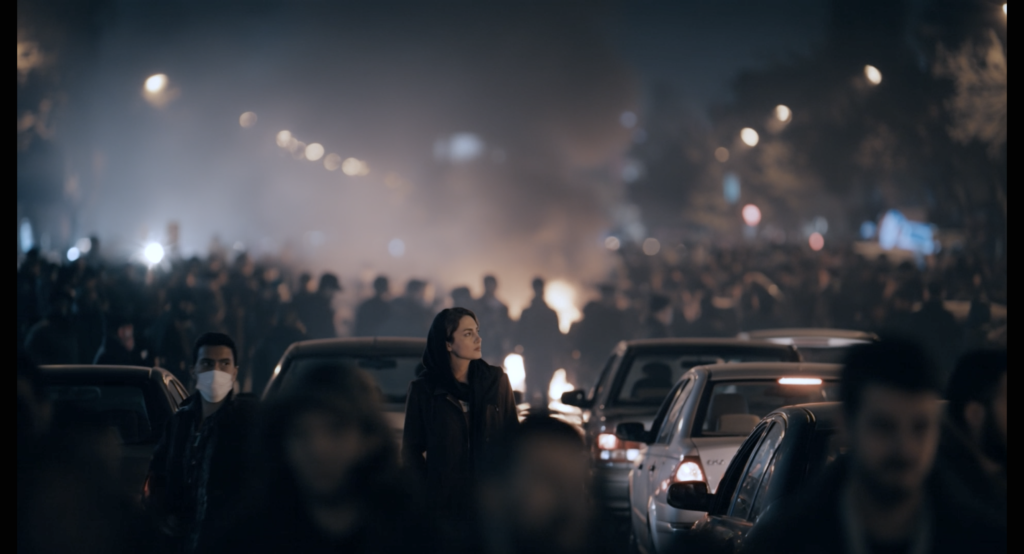
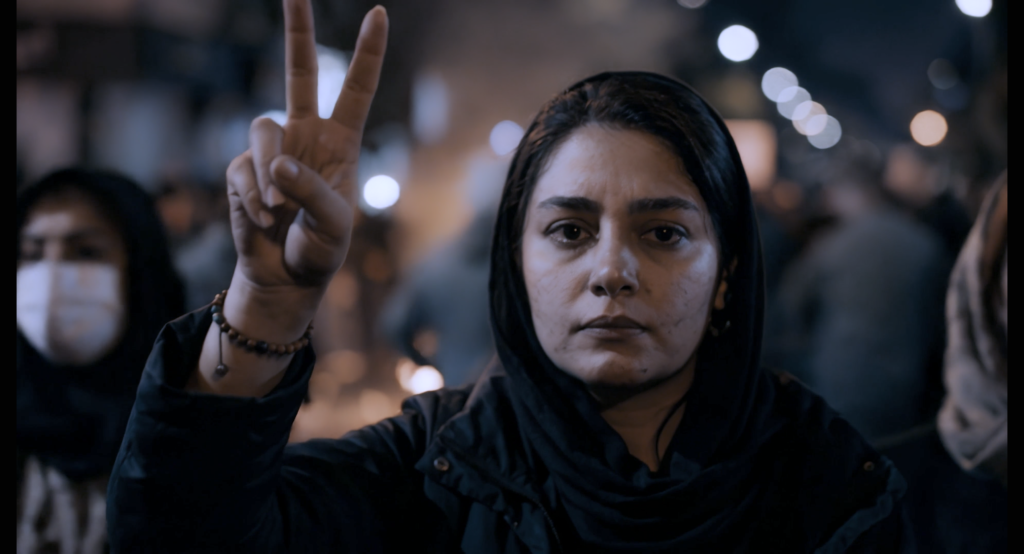
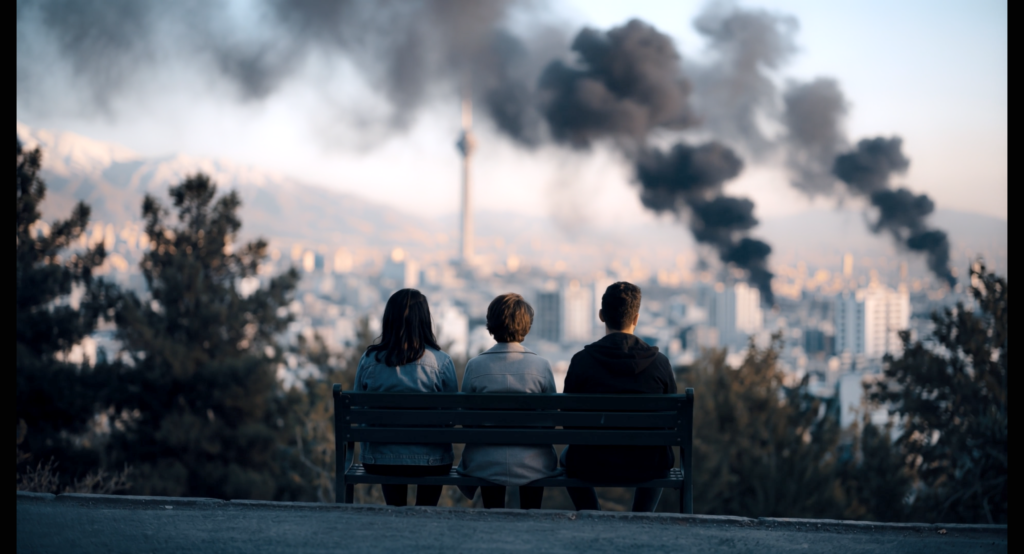
In June 2026, Ash released Dreams of Violets, which premiered at the Tribeca Film Festival as the first full-length, live-action film generated entirely with AI to be accepted by a major film festival. When we shared the news on The Persian Magazine’s Instagram page, we were met with a flood of angry comments questioning the ethics of using AI to depict the brutality that unfolded in Iran.
Reading those comments, I was conflicted. On one hand, I understood the frustration of my fellow Iranians. Does using AI minimize the murders of thousands of people? Before speaking with Ash, my answer would have been an immediate “yes”. Why use AI when countless photographs and videos are documenting the protests and mass violence? To me, AI risked stripping away the raw humanity of an event that those inside Iran endured firsthand and those of us in the diaspora continue to carry in different, but equally profound, ways. Throughout the comments, the phrase “AI slop” appeared over and over again.

But there was one important detail: almost nobody had actually seen the film. I interviewed Ash before Dreams of Violets was publicly available. My goal wasn’t to debate artificial intelligence; it was to understand the perspective of an artist whose career has spanned more than two decades across music, film, technology, and experimental media.
Interestingly, Ash had responded to nearly every critical comment on our post. He wasn’t defensive or dismissive. Instead, he repeated the same simple phrase: “I did what I know how to do best.” Those words stayed with me long after our interview. It raises a difficult question: when someone feels compelled to tell a story, do they have the right to tell it through the medium they understand best? At what point does protecting the memory of a tragedy become policing how artists are allowed to express it?
No, the irony was not lost on me. As Iranians, many of us have spent years condemning a regime that controls what stories can be told, what art can exist, and what forms of expression are acceptable. Yet, in our grief and anger, were we beginning to create our own restrictions around what an artist is allowed to make? That does not mean every artistic choice is beyond criticism. Art should be challenged and debated, especially when it engages with collective trauma. But there is a difference between questioning a work and demanding that it should never have existed. Ash’s response remained simple: “I did what I know how to do best.” By the end of our conversation, we had realized that the discussion hadn’t really been about AI in the first place. It was about intention.
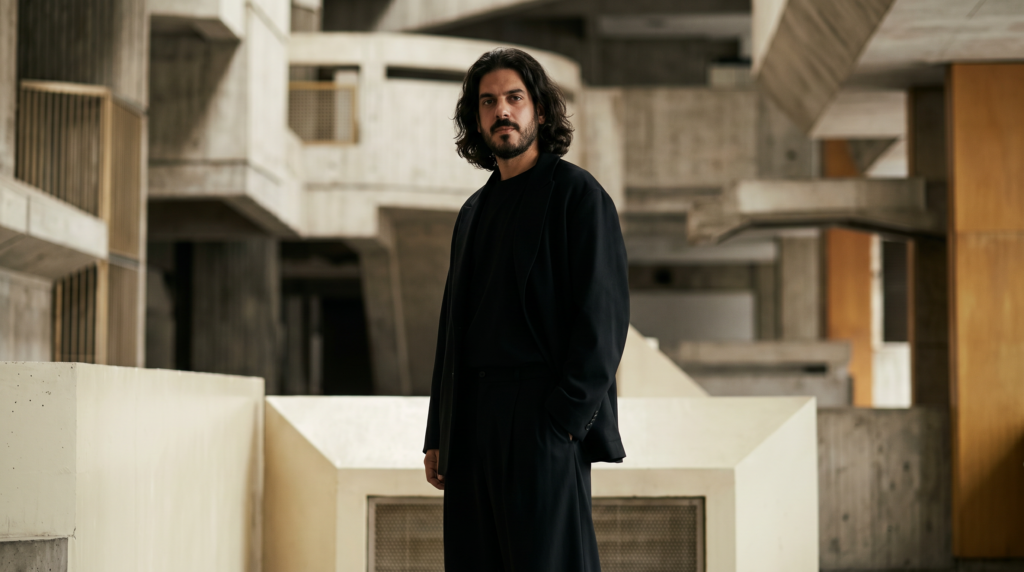
A few weeks after our interview, I finally watched Dreams of Violets. I expected to spend the entire film evaluating the use of AI. Instead, after the first few minutes, I stopped thinking about technology altogether. What stayed with me wasn’t how the film was made, but what it made me feel. The film’s final moments affected me most. By grounding its fictional narrative in the real voices of people whose lives were taken or the lives of their loved ones were taken, Dreams of Violets refuses to let the viewer leave without remembering that behind every artistic interpretation is an undeniable historical reality.
Whether one agrees with Ash’s artistic choices or not, dismissing the film as “AI slop” feels like an oversimplification after actually experiencing it. The film is emotionally deliberate and unmistakably personal. It is impossible to watch it and conclude that it was made carelessly. You may leave the film unconvinced that AI belongs in cinema. But I don’t think you’ll leave believing that Ash Koosha had nothing to say.
And with that, here are some highlights from my conversation with Ash:
Sarah Jafari: So to start off, why don’t you tell us a little bit about yourself and your background? You’ve moved through so many mediums: electronic music, virtual reality, experimental sound, and now AI filmmaking.
Ash Koosha: That’s always the hardest part! I grew up in Iran, didn’t finish high school, and just became an explorer of both art and technology. Growing up in Iran, we had to figure out technical challenges ourselves, so I became dual-minded. If I’m doing creative work, I need to know the toughest technicalities of the field. I started in music and audiovisuals, was in bands, ended up in film via No One Knows About Persian Cats, and around 2015 got deeply into AI and machine learning.
Sarah: It’s interesting that you didn’t finish high school, yet you’re so proficient with such complex technologies.
Ash: There’s a trade-off. At 15, I decided that if I didn’t care about school, I’d compensate by doing something way more worthwhile. It was high risk, but it paid off. I learned through mistakes rather than rewards. There was no exam for me in life, no boss, and no teacher. That’s the foundation for understanding your authority in exploration.
Sarah: How does never having an authority figure or boss direct you manifest in your work today?
Ash: Well, the world becomes your boss: the audience, society, the market. But for me, it stemmed from growing up in Iran, where authority was genuinely bad. That pushed me away from recognizing authority. As you get older, you accept the system to an extent, but when you’re younger, you need that drive to live for yourself.
Sarah: Moving into your creative evolution, before AI filmmaking, you were jumping across formats constantly. What drew you to building across so many different mediums instead of sticking to one?
Ash: The unifying thread for me has been automation. In Iran, we didn’t have access to top-tier equipment or studios, so we had to come up with hacky workflows to achieve results in a month that would otherwise take ten. When I moved to London and went deeper into electronic music, I kept finding ways to automate and innovate because I had the technical curiosity. To me, artificial intelligence is just an extension of that: a machine learning your process and giving it back to you. It extends our mind beyond our physical brain.
Sarah: That idea of the “extended mind” is fascinating. Looking at AI as a whole, where do you see its future heading?
Ash: AI is splitting into two paths: Generative AI, replacing physical mechanical work digitally, and Agentic Automation, having computers handle entire office workflows independently. Beyond that, we’re becoming comfortable asking machines that reflect a level of personality in language. When we pair computational power 50-50 with human intuition, that’s an evolutionary leap. Creativity proves humans aren’t meant to be erased. The future will be a hybrid of powerful information machines and biological humans utilizing them spontaneously.
Sarah: What would you say to people who argue that AI stunts creativity, especially regarding your film Dreams of Violets? Some critics in the comments felt using AI strips away the humanness of a real, painful story like the protests in Iran, suggesting documented footage or traditional methods would read better.
Ash: There’s a huge misconception sold by AI tool companies that anyone can press a button and make a film. But AI models have been out for 18 months, and nobody is making full, intentional films just by prompting.
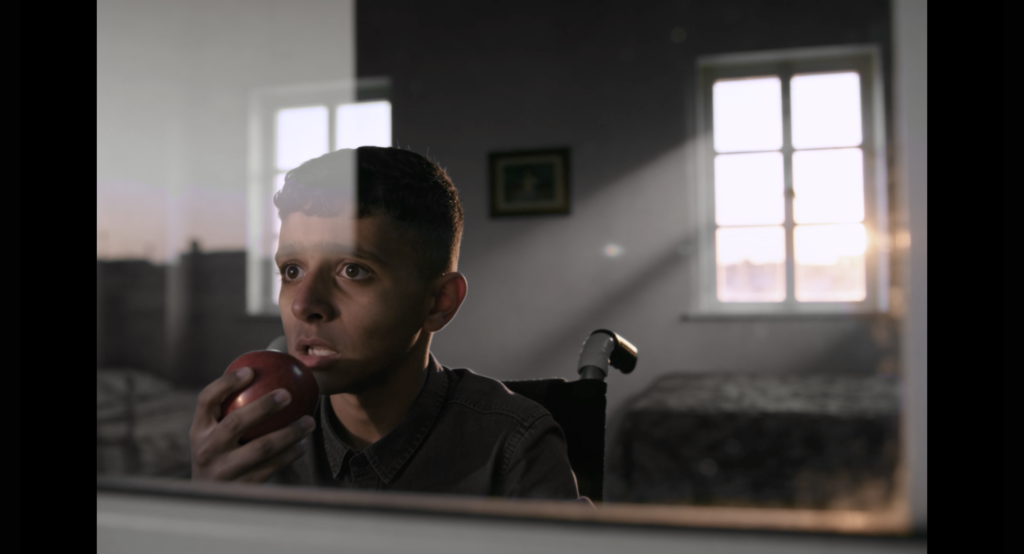
For Dreams of Violets, I spent a month watching 3,000 horrific images and videos of people being killed. I accepted that heavy responsibility. Documented footage collages already exist on social media. But when you want to dramatize a story with a very specific, cinematic imagination, how else do you achieve that? I couldn’t get a sign-off or budget to shoot on set in Iran. Some of the civilians whose photos inspired scenes are in prison right now. Reenacting massive explosions or dramatic scenes without a $50 million budget is impossible otherwise.
Sarah: People were comparing your approach to directors like Jafar Panahi, arguing that traditional Iranian art relies on that direct human presence to express terror and pain.
Ash: People say that without realizing the sheer labor involved. Jafar Panahi is a director who directs people on set. On this film, I wrote, edited, color-graded, and sound-mixed everything, plus composed the full soundtrack in a month. I did all the technical and creative labor single-handedly.
Second, Jafar is free to go to prison as much as he likes. I’ve been in prison in Tehran; I was beaten up for two weeks straight. I lost my youth to that nonsense, and I’m not doing it again. I can sit here remotely, tell my story, and express things visually that even a massive studio couldn’t replicate without an enormous budget.
Sarah: That makes total sense. Were you surprised by the backlash in the comments, or were you expecting it?
Ash: I expected it. People’s fear is real, but it’s actually the fault of AI companies pushing fear and making everyone feel like human artists are about to go extinct. People react impulsively because they associate AI with corporate evil without looking at the nuance or context of the artwork itself.
OpenAI isn’t going anywhere; that’s our reality. My real worry isn’t whether AI exists, but who uses it. If real artists refuse to touch it, we’re allowing product managers and tech companies to define the aesthetic language of the next generation, resulting in low-quality “digital slop.” My mission is to preserve the language of cinema, the mise-en-scène and the decoupage that’s been built over the last 125 years, rather than letting algorithms dilute it.
Sarah: Beyond cinema, a lot of up-and-coming artists are genuinely terrified of AI. They view it as a direct threat to their livelihood and ask, “How can I stop this?” What advice would you give to artists who are feeling resistant or scared of these technological advances?
Ash: First, understand that asking AI for something won’t magically give you a good outcome or story; it takes intention and skill built over thousands of hours. Don’t fall for the hype sold by tech companies that these tools replace artistic depth.
Instead of fighting the technology or letting product managers define what art looks like, take control of the tools yourself. Use them as an extension of your own mind and process. The courage to innovate comes when you understand the technicality behind the medium
—
You decide. Can AI truly capture the deeply human and collective trauma we have all endured? Watch now on watch.fountain0.com/movies